

I visited the Centre Pompidou in Paris in 2011.
I do not want to pretend I understood every work I saw. What stayed with me was the building. Pipes, escalators, and structure exposed on the outside; things that usually belong inside had been pulled out into the city. At first it looked unfinished, almost mischievous. And yet there it was, standing in the middle of Paris as a museum.
So when I heard the Pompidou name was coming to Seoul, I thought first about the place, not the collection.
The 63 Building, of all places.
The Building That Once Meant Seoul
The 63 Building is an old image for me. When someone said they were going to Seoul, this was the building that came to mind: gold glass, the Han River, the observatory, the aquarium, family outings, tour buses. Before Seoul’s image was split among Lotte World Tower, Seongsu, Hannam, DDP, The Hyundai, and a dozen other scenes, the 63 Building looked like the city’s future.
But landmarks age too.
What once looked like the future eventually becomes a memory. Taller towers appear, newer places take over the city’s image, and older symbols do not disappear so much as move into the background. That is what happened to the 63 Building. It remained, but it was no longer the single image of Seoul.
Now an art museum has moved in.
A Box of Light Where the Aquarium Used to Be
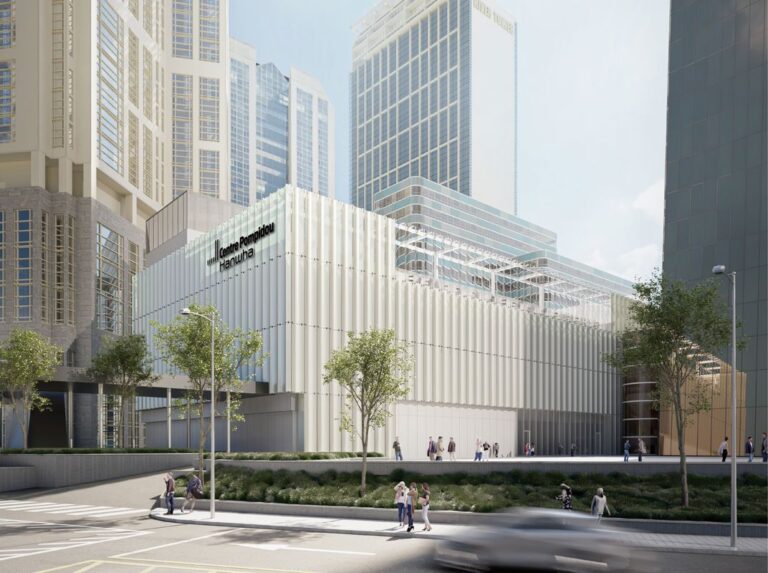
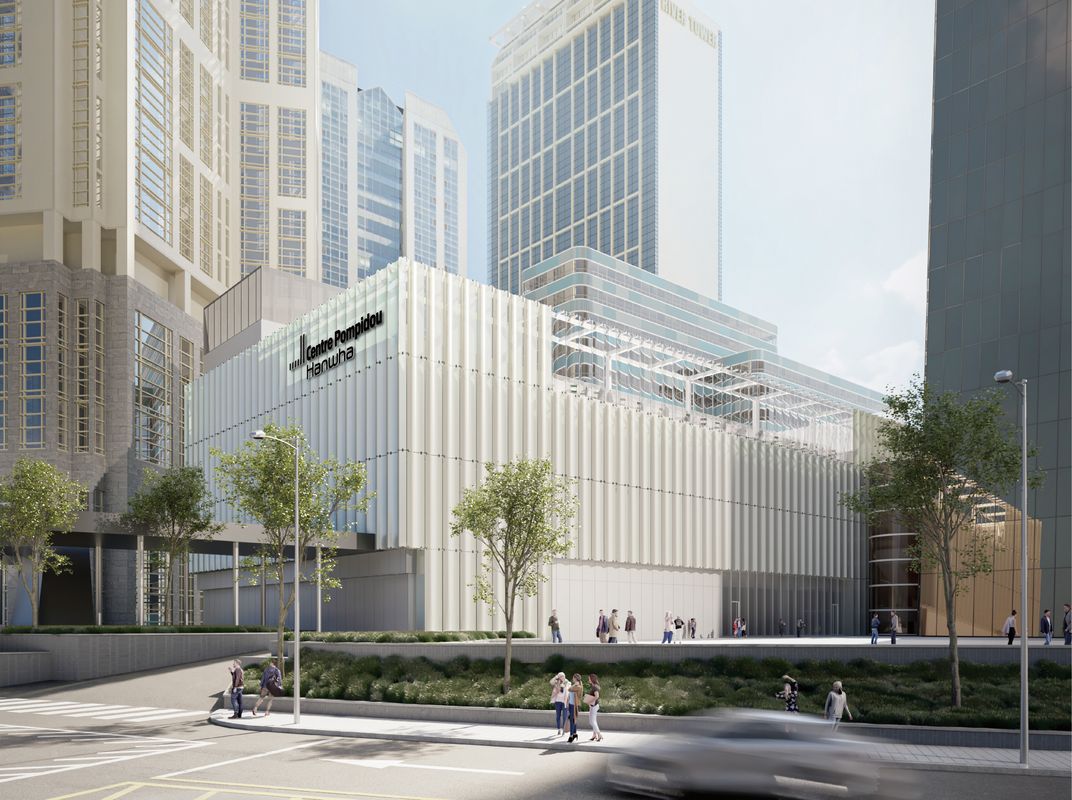
Centre Pompidou Hanwha opened on June 4, 2026. It was created through a partnership between the Centre Pompidou in Paris and the Hanwha Foundation of Culture, and designed by Jean-Michel Wilmotte. According to the official introduction, it remakes the structure inside the 63 Building that used to house an aquarium. Four levels, more than 10,000 square meters, two galleries. The Centre Pompidou describes it as a “box of light.”
The phrase makes most sense at night.
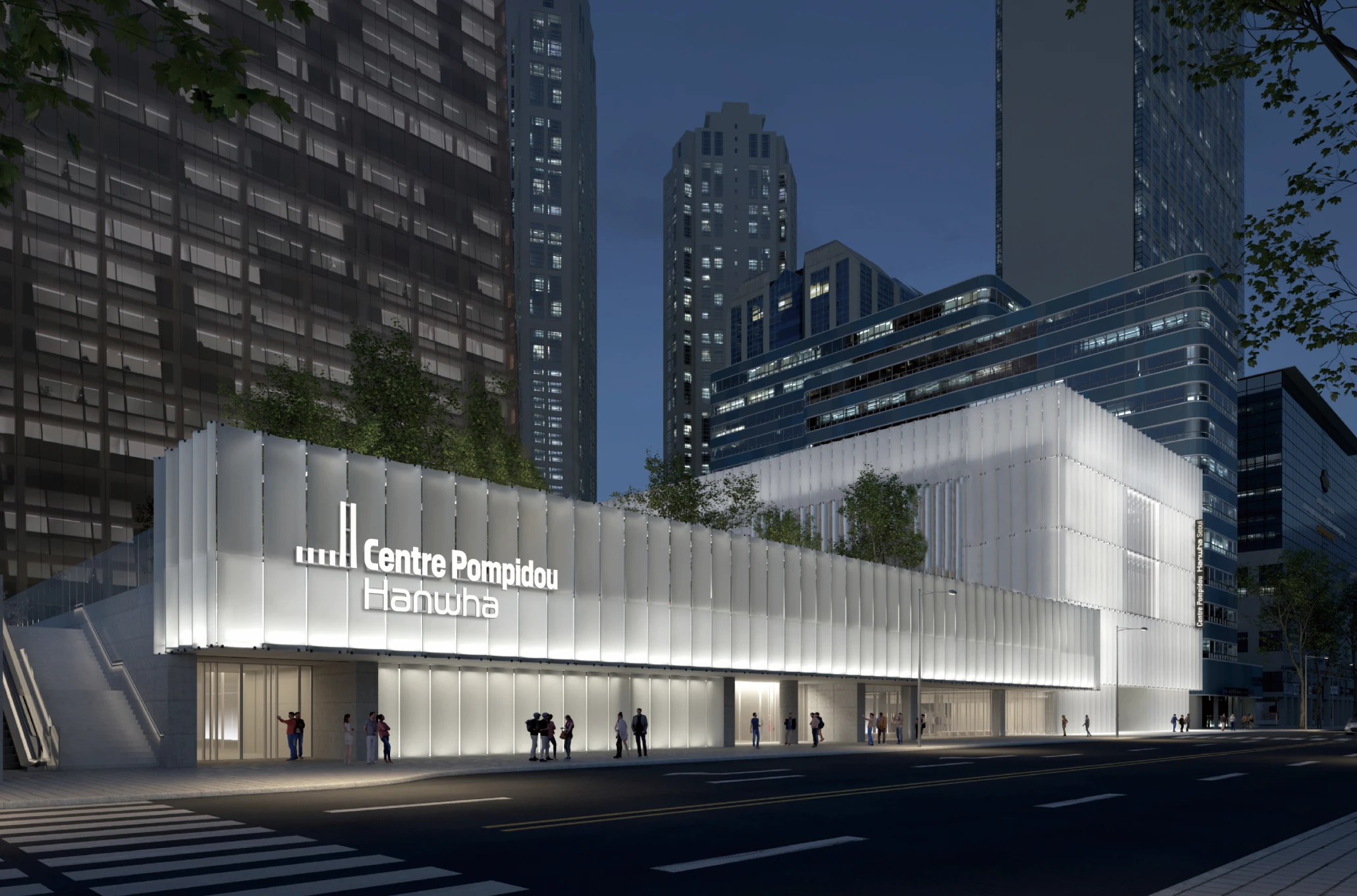
By day, daylight enters through the glass facade. By night, the light inside spills toward the city. Next to the vertical mass of the 63 Building, a horizontal white band now lies across the ground. It is not a competition in height. It is an attempt to empty an old structure and give it a different rhythm.
While the Paris Building Is Closed
The timing is interesting. The Centre Pompidou’s main building in Paris is undergoing a major renovation from 2025 to 2030. The building is closed, while works from the collection move to the Grand Palais, Centre Pompidou-Metz, and international outposts. So it would be too simple to say, “You cannot see Pompidou in Paris, but you can in Seoul.” The building is closed, but the collection and programs keep moving outside it.
A better way to put it is this: for now, Pompidou is less one building than a constellation of cities, and Seoul has become one of its new bright points.
The inaugural exhibition is The Cubists: Inventing Modern Vision, running from June 4 to October 4, 2026. The official exhibition page lists 43 artists from the Pompidou collection and 11 artists in KOREA FOCUS, with 91 Pompidou works and 21 Korean modern works. The press kit describes the show as 54 artists and 112 works in total.
What interests me is the KOREA FOCUS section. The exhibition is not only importing a French collection into Seoul. It asks how Korean modern art in the early twentieth century imagined, translated, and answered Paris. When a figure like Yi Sang enters that frame, the show starts to look less like a foreign brand landing in Seoul and more like a piece of history being reread here.
A Reason to Return
This is not only a story about one museum. The 63 Building itself is being rewritten. Its 60th-floor observatory has shifted toward media art, and a rooftop that had been closed for 16 years has reopened. A report based on Hanwha Life’s renewal materials also mentions the “63 Oudolf Garden,” designed by Piet Oudolf, known for planting design at New York’s High Line and Chicago’s Lurie Garden. The important nuance is that this garden belongs to the broader 63 Building renewal, not only to Centre Pompidou Hanwha.
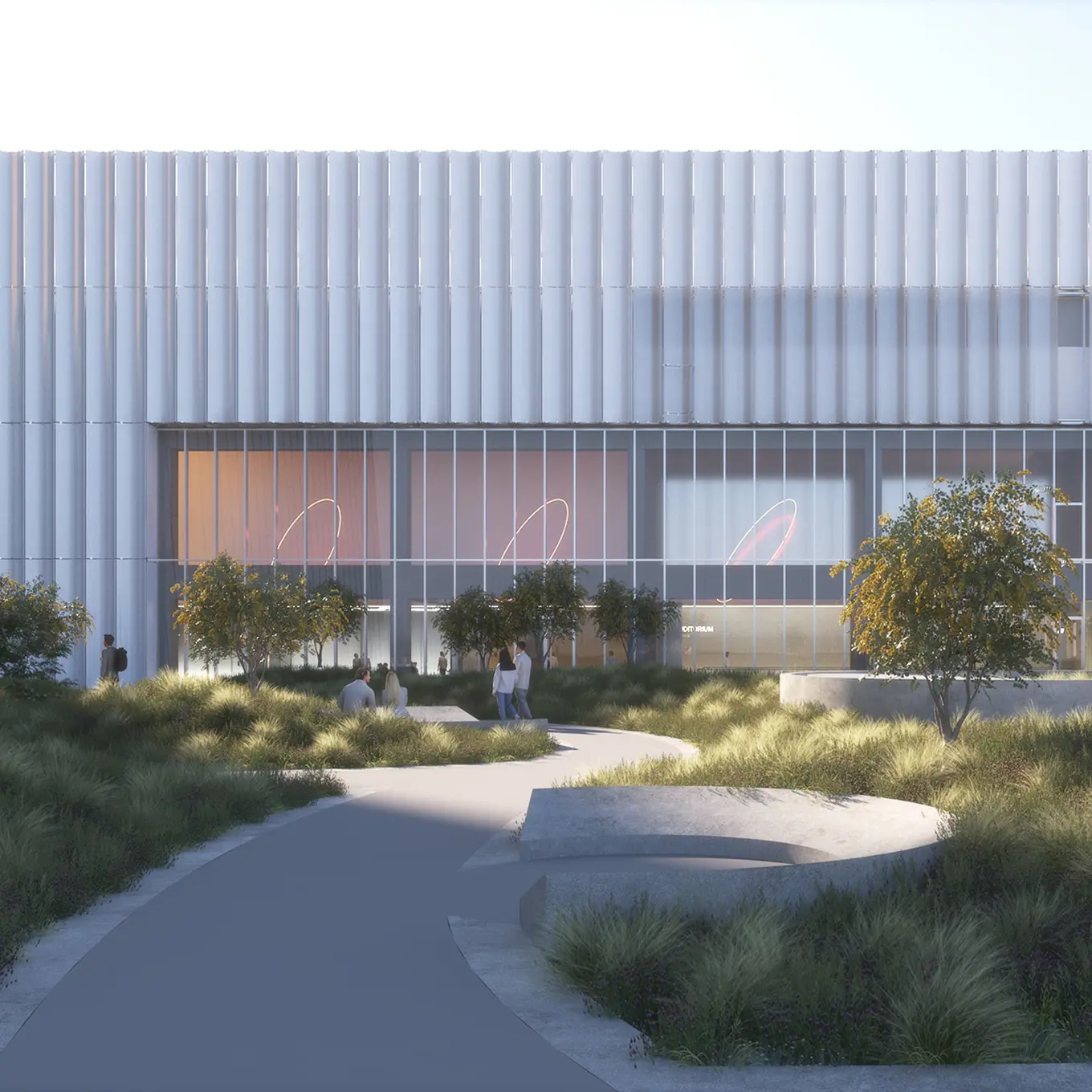
A building that once competed by height is trying to call people back by what it contains. I like that shift. A city landmark can age in two ways: it can remain inside old photographs, or it can be read again through a new use.
The 63 Building has chosen the latter.
What More Museums Mean
I like the idea of more places like this in Seoul. It is good for people, for the city, and for artists.
Museums are inefficient spaces. They do not resolve quickly. They do not always give you an answer. Sometimes you feel nothing in front of a work. Sometimes you stay in a room longer than expected for reasons you cannot explain. But that inefficiency is exactly why cities need museums. People need time that does not produce anything, and cities need places that can hold that time.
The feeling that Seoul is becoming a global megacity comes from moments like this. Not from another tall tower, but from the growing list of things one can see on a Tuesday evening.
Someone’s First Pompidou
In 2011, I met the Pompidou for the first time in Paris. That was where I learned that even if you do not know much about art, a space can still stay with you.
In 2026, someone will meet it for the first time in Yeouido. On a school trip, on a date, or because they remember the old aquarium. Some of them will leave with something, even if they still do not know much about art.
Someone’s first Pompidou will not be Paris. It will be Yeouido.
That, too, is what it means for a museum to open.
Discussion
0 comments